
Book Review: "Ani.Mystic"
And, divining the soul of barbecue

Last week we awarded personhood to corporations. This week, we extend it a bit further. I’m finishing this piece on a flight from Kansas City back to New York. While my wife and I were working from here this week, people kept telling us about Joe’s KC, which is a barbecue restaurant inside of a gas station. It sounded a bit gimmicky, so we hadn’t planned on visiting it, but we finally decided to squeeze it in for lunch before we left. (My original impression was wrong - it was as awesome as they say.)
I had realized that it would somehow be a snub not to visit this legendary joint. That it would have been more than just missing out on great barbecue - it would have been a failure to acknowledge the soul of the city I was visiting, a failure to try to understand and experience why this place has decided to refine this particular cuisine to high art.

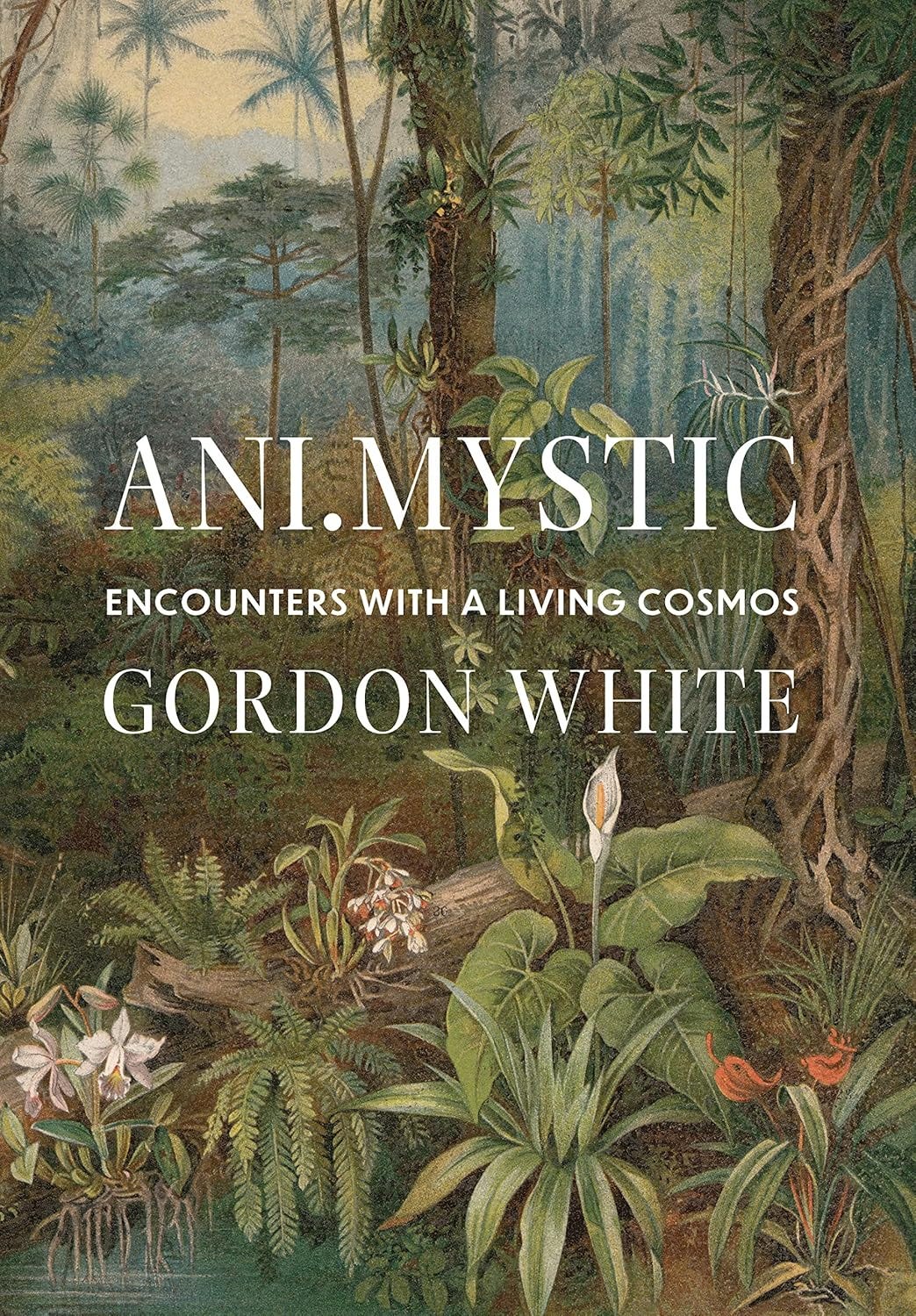
Extending personhood beyond the human has been a recent theme here, inspired by Gordon White’s book Ani.Mystic, which stands as an important complement to the two cornerstones of the Western philosophical theory of mind.
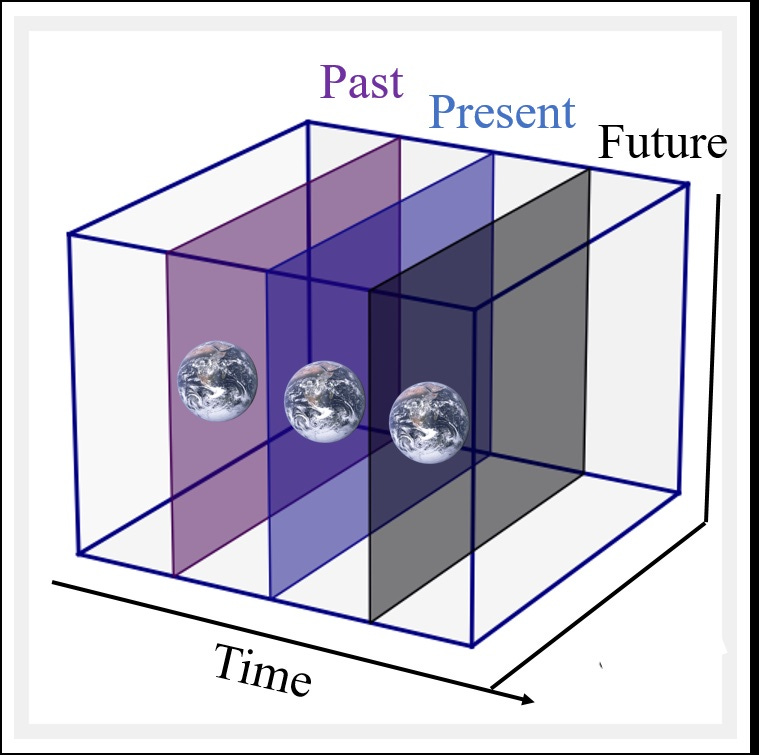
The first is the materialist paradigm, where the universe is entirely specified by the relationships between matter and the laws of the universe acting upon it, with consciousness as an epiphenomenon. We live in a world which is formed, rather than forming. A four-dimensional block of space-time from the Big Bang to the heat death of the universe where the ultimate outcome is known to God, if not us as three-dimensional observers embedded within it.
The second is the idealist paradigm, that humans operate in the world by generating mental models of how the world should be, architectural blueprints which are then “imposed on unthinking matter.” This is the close cousin of the “great man” theory, and indeed is not far from how such colossally successful individuals as John D. Rockefeller perceived themselves. Mind as the master of matter.
White’s important complement is the animist mode of thinking and being, which is neither primarily oriented toward explaining what things are, nor making ideas into things, but rather coming into right relationship with the persons who constitute our world - human, and otherwise. As a refresher from last week, in the animist world, every non-human entity that we can perceive - an object, a plant or animal, an idea - can be viewed as potentially a person with agency, even if that agency is expressed in different ways by different “species of person.”
There is no easy way of explaining what being in right relationship means, because right relationship is something that is lived, “journeyed through,” rather than explained. Adopting the mentality of custodianship - of an artistic idea, of a piece of land, of an organization, of our planet - is closely tied in with being in right relationship. But this isn’t the custodianship of putting artifacts in museums to preserve them - rather, it is a dialog with another being which offers its own story, gifts and desires. As filmmaker David Lynch exhorted regarding artistic projects: “If you stay true to the idea, it tells you everything you need to know, really.”
Through the lens of right relationship, we can deepen and build upon rather than invalidate the strengths of the materialist and idealist philosophies. When it comes to explaining what things are, rather than stopping at a series of facts (e.g., Kansas City has a population of roughly 500,000, was incorporated in 1850, etc.), White offers a more personal way of knowing rooted in dadirri, an indigenous Australian word meaning “deep listening” in relation to a place, which bears interesting parallels to the French art of flaneuring as well as Franz Bardon’s depth point meditations. The key question is not “what is X?” but “how can I come to know X deeply?”
Similarly, White offers an expansion of the idealist mode of “making via turning blueprints into objects.” Rather than make our lives, we weave them. A book is woven from the life experiences of the author and the currents of thought it stands within, encapsulated in the citations and bibliography. A cake is woven from its recipe, its ingredients and their labyrinthine journey through our food system, the occasion for its baking, and the intent and care of its baker.
This understanding of “making as a subset of weaving” offers another way to think about growth and flourishing. Contra standard economic theory that the best thing is ever-increasing GDP growth1 (and its close cousin, the idea that the best way to live life is to make as much money as possible), this way of thinking measures growth in the establishment of a rich ecosystem of personal connections and relationships. Rather than reaching an end point of satisfaction in our lives, we constitute our worlds daily by entering into and tending to the “web of agreements” with the people surrounding us. A world perpetual forming, instead of one that is formed.
While not diminishing the evils of the world, from climate change to empire, the book fittingly refuses to offer an “animist blueprint” for how the world should be. Rather, it calls us to bring our own cosmos - the portion of the world which is local to us and can respond to our individual care - into right relation, in line with Christian theologian Swedenborg’s notion of “doing the good that we know how to do.”2 The cornerstone of this section is a stellar quote from Dr. Tim Ingold: “Human beings do not so much transform the material world as play their part, along with other creatures, in the world’s transformation of itself.”
An animist theory of evil is not given an extensive treatment in the book, but in short, it could be considered an extreme instance of falling out of right relation. An “objective” animist theory of evil is made difficult to achieve by animism’s close relation to perspectivism, as encapsulated by Nietzsche who noted that “Objectivity [itself] was a relative notion. Interpretation is the essential or almost quintessential mode of human life.” Still, I believe that the worst of moral relativism can be avoided in this framework, and for those interested in diving further into this topic, Dion Fortune gives an interesting treatment in the Cosmic Doctrine.
Ani.Mystic is not an easy read - though interspersed with compelling personal stories, the theory sections felt like a strenuous workout for the mind. This should be no surprise, as it truly does present a paradigm for a theory of mind that is alien from the ones we are most familiar with in the West. It is a deeply studied and thoughtful work, citing a range of Aboriginal Australian, Amazonian, African and Native American philosophers and anthropologists whose vivid thinking shines through in these pages. For those intrigued by the above, I highly recommend the book.
Is there a better example of a successful mass banishing ritual than the presumption that the only way to measure the flourishing of a society is its GDP?
This does not preclude drafting blueprints for a better future, should those be in one’s sphere of genius!
Really love this idea of not forcing things. Like actually listening to places and moments instead of just rushing through them. Joe’s was SO good btw, glad we went!!