
Spiritual Engineering
Turning the lights on

As we continue our quest to demystify the spiritual path, the time has come to turn to science’s wizened elder sibling - engineering. Long before we knew about Newton’s laws of motion, foundational knowledge for modern structural engineering, humans were still somehow building impressive, long-lived feats of architecture. How?
Throughout ancient and medieval history … no theory of structures existed and understanding of how structures stood up was extremely limited, and based almost entirely on empirical evidence of 'what had worked before'. Knowledge was retained by guilds and seldom supplanted by advances. Structures were repetitive, and increases in scale were incremental.1
I suspect Le Wik is somewhat underselling the ancients’ intuitive understanding of the forces at play. Nonetheless, if we accept the premise established in prior weeks that the spiritual and business worlds exist in largely the state in which the field of physics existed prior to the scientific revolution, that is, operating without a set of refined and universally agreed laws which create a high degree of predictability in experimental outcomes, then the principles of engineering may still prove to be a useful orientation to accomplishing one’s personal objectives, whether on the spiritual or material planes.
The most important principle of “spiritual engineering,” in my estimation, is to know what problem you’re solving. Because that’s what engineering is all about - solving problems. Simply answering this question can cut through large swathes of memetic junk floating around the astral plane. We can laugh at how the ancient theologians debated the number of angels that could dance on the head of a pin, and see this question as quite beside any possible point, but there are still lively debates raging today - reformed Christians (strange bedfellows with materialist atheists) arrayed against Catholics on the questions of free will and predestination; Hermeticists and Advaita Vedantists debating whether there are truly three levels of metaphysical reality, or five, or seven, or 49.
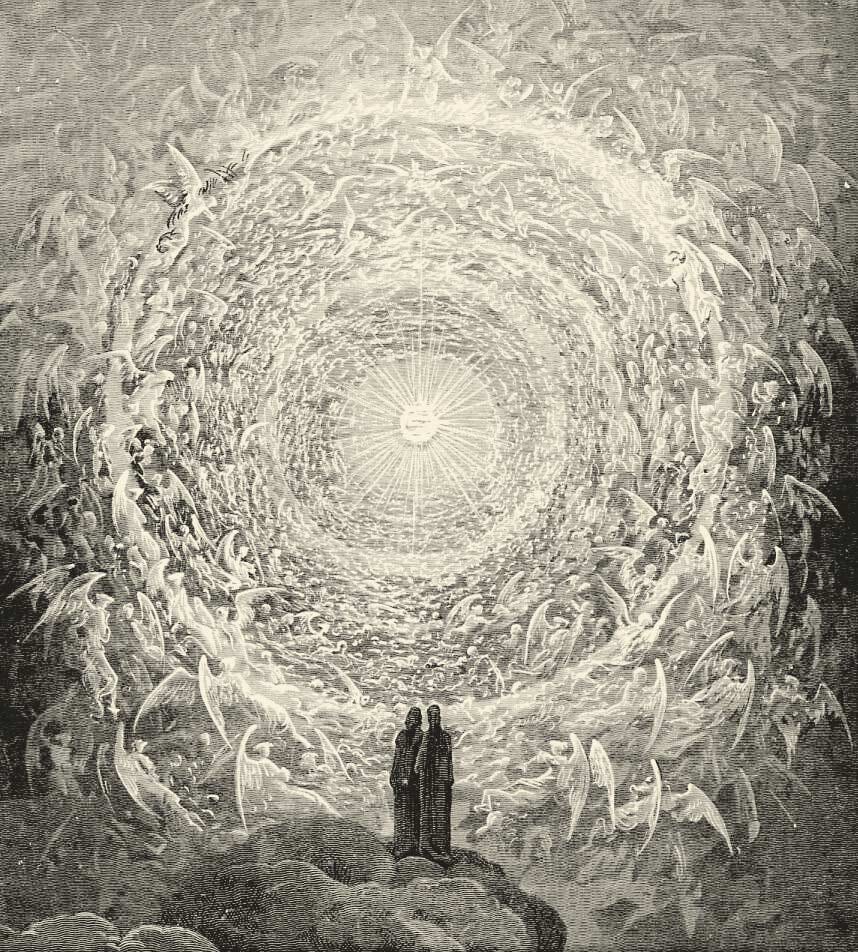
Taking the engineering approach, one can gracefully sidestep these debates entirely. Yes, there may be interesting things to see from the vantage point of one view or another, but ultimately, if resolving your problem is not contingent upon answering a question like this, the question can safely be ignored. Conversely, if it is in fact contingent, the competing answers present not an obstacle but a convenient set of frameworks through which to view the problem and hopefully resolve it.2
My second principle of spiritual engineering is summed up in Picasso’s quote, “Learn the rules like a pro, so you can break them like an artist.” As with pre-modern structural engineering the fact of “knowledge … retained by guilds and seldom supplanted by advances” is absolutely the state of play in most subjective fields. If you meet a group that is claiming otherwise, the scientific burden of proof rests on them. What this means is that apprenticeship is paramount. Without a set of universal scientific principles, diverse groups have evolved an array of meditative and spiritual techniques that actually work to achieve various goals, but often with superfluous dogma piled on top, which is why movements such as “Buddhism Without Beliefs” have proven so attractive to Westerners. The trick is figuring out which stuff is superfluous, which isn’t as easy to tell as one might think. There is the type one error of not adopting enough of a system to realize its effectiveness, and the type two error of becoming an intolerable dogmatist. But worse than both, particularly in a field where scientific precision has not been achieved, is to bet on successfully building a system from scratch.
The third principle, after identifying the right problem to solve and picking a system that is battle-tested by the decades (or millennia, as it were) is to work from a concrete theory of how the problem is going to be solved. The work at the beginning is emotional, not intellectual. I need to be willing to put my half-baked theory of how this problem is going to get solved on the table before anything good can happen. Half-baked is much better than nothing - as the philosophy of science axiom holds, “data is theory laden,” and so if there is no concrete theory stated, there is little chance of discovering useful data along the path. This also allows for the powerful move of reasoning from counterexamples, which Henrik Karlsson’s essay How to Think in Writing discusses in great detail.
Where I have fallen short in decision-making, whether on the spiritual path or in the business world, it has always ultimately stemmed from a failure to consistently apply the principles above. Conversely, patient application of these has led to moments of remarkable breakthrough. As John Locke found in the classic television show LOST, you never know when the light is finally going to come on.
There is a lot more to be said on the purpose of frameworks and models, which are often thought of as tools for predicting reality but which are better thought of as aids to decision making, as the aims of the decision inherently shape the types of predictions which will be most salient. See Mike Fisher’s great essay on frameworks for more.
Great read!! Really like this idea of “spiritual engineering.” Asking what problem am I solving? feels like such a good way to stay grounded and not get lost in debates that don’t help find a solution.